Stuttgart / EU work rights / remote

I find the bottleneck. Then I build the system.

Mechatronics engineer turned hands-off systems builder. I cut an industrial process by a conservative 85%. Now I build falsification engines, agent workflows, operating tools, and the cited AI twin on this page.

01 Forward Deployed Engineer02 Quant Developer03 AI Engineer04 AI Researcher
Jake Snedker, systems engineer and AI automation builder
Jake SnedkerEngineer / builder / operator
-85%Conservative process reduction
~640hReturned per engineering project
by Jake's calculation
15-20Person technical group
led remotely
4Physical off-grid systems
built by hand
~70 / ~7n8n workflows built / reached
personal-scale production
Name
Jacob “Jake” Snedker
Based
Stuttgart, Germany — since October 2021
From
Perth, Western Australia
Work rights
Australian citizen, right to work in Germany and the EU
Open to
Forward Deployed Engineer, Quant Developer, AI Engineer, AI Researcher
Position / not a keyword pile

Who you would actually be hiring.

The short version, before the systems: what I do, where it came from, and the one result that was measured inside somebody else’s company.

Since mid-2025 I have been running Snedker Automations as a Forward Deployed Engineer, while building Popper and other autonomous trading-research systems.

I have lived in five countries over 34 years: 26 in Australia, then New Zealand, two years in Canada, most of a year in Mexico, and five in Germany. From each base I travelled outward — 30+ countries visited, the US from Canada, Guatemala from Mexico, western Europe from Stuttgart. Four off-grid builds, and a Canadian business operated from Mexico. That range is not decoration. It is why I am comfortable entering a system I do not know, watching before touching it, and finding the constraint others have normalised.

What that looks like in practice. At ThyssenKrupp I let three projects go past before I built anything. I asked why cable management took two engineers five to six weeks, found the constraint, and built the replacement with the older engineer who would have to live with it. Project four ran with one engineer in about two weeks. Nobody had to be talked into using it.

That was 2017. It is still the cleanest example I have, because it is the one that was measured inside someone else's operation — and that is the specific thing a personal portfolio cannot fake. What changed since is the domain, not the sequence: Popper exists because five years of trading told me which claim needed falsifying, and the twin on this page exists because a CV cannot be interrogated. Same behaviour, harder problems. The current work is in the atlas below.

Forward Deployed EngineerQuant DeveloperAI EngineerAI Researcher

Current systems / 2026

What I am building now.

Nine systems, ordered by what they prove rather than by how new they are. Problem, architecture, evidence, limitation — you should not need to open a card to understand the work, and opening one should tell you considerably more than a bullet list. Behind these sit roughly seventy workflows built and about seven that reached production, all of them for Jake, his family, or a friend’s business.

02 / In production, for someone elseLive / used Aug 2026

Market sales app

The only system here that other people depend on to get paid correctly. It ran a real market stall in August 2026. Apps ScriptPhone-firstMulti-market2–3 vendorsSumUp fee split + Build notes
Problem

Several artists share one stall and one card reader. At the end of a market someone has to work out who sold what, and who owes what share of the card fees. Done on paper it is slow, done in a spreadsheet at the end of a cold day it is wrong, and the person holding the reader silently absorbs everyone else's transaction costs.

Architecture

One Google Apps Script web app deployment serves every market, selected by a ?m=<sheetId> parameter rather than a copy per market — so a fix ships everywhere at once instead of being re-pasted into forks. A Data Entry › New market dialog spins up a whole market from a name and a list of artists: sheet, tabs, and vendor columns.

The detail that matters

SumUp's 1.39% card fee is split per line into Fee and Net columns at entry time, not reconciled afterwards. Each vendor is paid their own net, so the fee lands on the sale that incurred it. That single column is the difference between the app being used and being abandoned.

Evidence

Live and in use across multiple markets, with two to three vendors on a stall on the busier days, including a real trading weekend in August 2026. A portfolio-safe version of the allocation logic is public.

Limit

Real users, small scale. This is a family business and the stallholders beside it — not a customer with a contract, a support rota, or a load profile. It proves adoption and correctness under real money, not throughput.

03 / Human-in-the-loop publishingLongest-running in production

Approval-gated poster

An n8n and Airtable pipeline that will happily write the caption and will not publish a word of it unattended. n8nAirtable gateInstagram GraphOAuth2 refreshYears live + Build notes
Problem

A craft business needs a consistent posting cadence and has no time to produce one. Generic AI captions solve the time problem and destroy the thing people actually follow the account for, which is its voice.

Architecture

Image from Google Drive → caption generated against the account's own tone → row lands in an Airtable approval queue → a daily check picks up approved rows → spacing logic decides whether today is a sensible day to post → publish through the Instagram Graph API. Google OAuth2 and long-lived Graph tokens both refresh on their own.

Trust design

The approval queue is the whole point. The system is allowed to do the labour and not the judgement: nothing reaches the account that a human has not looked at. That is the same gate Job Hunter uses on email, and the same reason Popper never lets a model score its own idea.

Evidence

Jake's first workflow to reach production and still the longest-running one. Years of uptime through token expiries and platform changes is an adoption number, not a demo — it survived neglect, which is the harder test.

Limit

One account, one business, no external SLA. It shows a trust boundary designed correctly and left alone for years; it does not show multi-tenant scale.

04 / Programmatic videoBuilt / output not good enough

Reel pipeline

Branded 9:16 video rendered from config, with captions word-synced to the voice track rather than guessed. The plumbing works. What comes out the end still is not good enough. Remotionedge-ttsWord-level syncConfig-drivenReact → MP4 + Build notes
Problem

Short-form content for a venue product needs volume and cannot look generated. Every cheap pipeline produces the same drifting stock footage with captions floating half a second off the audio, and viewers have learned to scroll past it in under a second.

Architecture

Remotion renders video as React, so a reel is a component and a config file rather than a timeline someone drags by hand. Narration comes from edge-tts with word-level timings, and those timings drive the caption track directly — the words land on the syllable because they are the same data, not because someone nudged them.

Where it actually is

The mechanism works: render from config, narration with word-level timings, captions driven by those same timings. The output does not. It still reads as generated filler, which is the whole problem this was meant to solve, so I am not going to claim otherwise on a page about hiring me. An earlier attempt through a generic content tool was abandoned for the same reason.

Limit

This is the one system on the page that has not met its own bar. It is here because the honest portfolio includes the thing that is not working yet, and because the gap is instructive: the engineering was never the hard part, taste and source material are. Next build.

05 / Orchestration layerLive / daily driver

Mission Control

One dashboard that answers the only three questions that matter across every project at once. Next.jsFastAPISingle state storeClaude proposesJake approves + Build notes
Problem

Running eight builds at once, the expensive failure is not slow work — it is a project quietly stalling on a blocker nobody has looked at for three weeks, while attention goes to whichever one was touched most recently.

Architecture

Next.js front end over a FastAPI service and a single state file per project. Each project answers exactly three fields: next action, progress, bottleneck. The constraint is deliberate — anything richer becomes a second project to maintain.

Trust design

A hybrid brain: Claude reads the state and proposes the next move, Jake accepts or rewrites it, and only the approved version is written back. The model never silently edits the thing being used to make decisions.

Limit

Single-user, local, started on demand. It is the control surface for one operator's estate, not a team tool, and it has never been tested with a second person writing to it.

06 / Popper add-onBuilt / low use

Strategy Forge

Not a separate product. It is the export layer bolted onto Popper, so one strategy definition renders to PineScript and MQL5 without drifting. Popper's DSLPineScriptMQL5Coverage guardsBuilt by an agent + Build notes
Problem

A strategy validated in one engine can mean something subtly different once it is hand-written again for TradingView or MetaTrader — and the disagreement usually surfaces as live behaviour that does not match the backtest, which is the most expensive place to find it.

Architecture

Deliberately subordinate to Popper. Popper owns the grammar, the validation and the feature semantics as the single source of truth; Forge owns nothing but the two renderers. Adding a third target means writing a renderer, never a second dialect.

Error prevention

Coverage guards enumerate the shared feature set and fail the build when either target lacks a renderer for something the DSL can express. Unsupported exit logic is refused outright rather than approximated — an approximation is exactly the silent drift the tool exists to prevent.

How it was built

Written end to end by an autonomous agent run, then reviewed. That is a demonstration of Jake's current working method rather than a claim about it.

Limit

The plain-English front end depends on a local Claude CLI, so it is a deployment surface for Jake rather than a hosted product. Built, and honestly low-use.

07 / MQL5 optimisationBuilt / needs testing

JJC BOT V13

A five-stage optimiser that refuses to spend later-stage compute when the foundation has no edge. 5 stages18 clustersWalk-forward gates + Build notes
Stages

Foundation, entry refinement, time and context, trade management, then exits and risk — each compared against the correct reference, baseline early and the winning system later.

Architecture

Gates between stages stop weak paths before more parameters are added, because the cheapest way to fake an edge is to keep adding degrees of freedom to a foundation that never had one.

Evidence

The associated bot passed both phases of a real prop-firm challenge and reached a live account.

Limit

It then lost that live account before a payout. No automated-trading profit has been taken. Those two facts always travel together — and the second one is why Popper exists.

08 / Decision-maker outreachPaused / draft gate

Job Hunter

Find the role before candidate 400, then write to a person. Not an auto-apply bot. Claude + GmailHuman-gated drafts18 logged + Build notes
Problem

Good roles are crowded before a conventional application reaches the person who owns the problem.

Architecture

A scheduled run drives Claude through explicit search lanes, finds the decision-maker behind a signal, and writes a short Gmail draft. A local dashboard and a JSON ledger handle dedupe and outcomes. Sending stays manual by design.

Evidence

Gmail audit: 15 sent, 12 delivered, 3 invalid-address bounces, one automatic acknowledgement, zero human replies. Nine records were mislabelled as draft. Reported here as measured, not as hoped.

Limit

The verification gate and ledger are both broken, so it is paused in draft-only mode until they and the AI-written subject lines are fixed. It is on this page as an honest in-progress system.

09 / You are standing in itLive / cited

This twin

The assistant on this site. It cites its evidence, degrades instead of guessing, and fails closed. Supabase EdgepgvectorGroq → NVIDIA failover + Build notes
Architecture

Exact-origin browser gateway → Supabase Edge for rate limiting, sessions and idempotency → retrieval over a public-only corpus → grounded generation on the VPS → an allow-list that discards any citation the model invented.

Degradation

When vector search returns nothing usable it falls through to Postgres full-text rather than answering ungrounded, and the whole path fits inside 23.5 seconds of a 25-second budget. Groq fails over to NVIDIA rather than to an apology.

Limit

It can quote the record and cannot yet hand you an artifact. Ask it something it has no evidence for and it will say so rather than improvise — which is the intended behaviour and also the shortest demo of the point.

Real artifacts, correctly labelled.

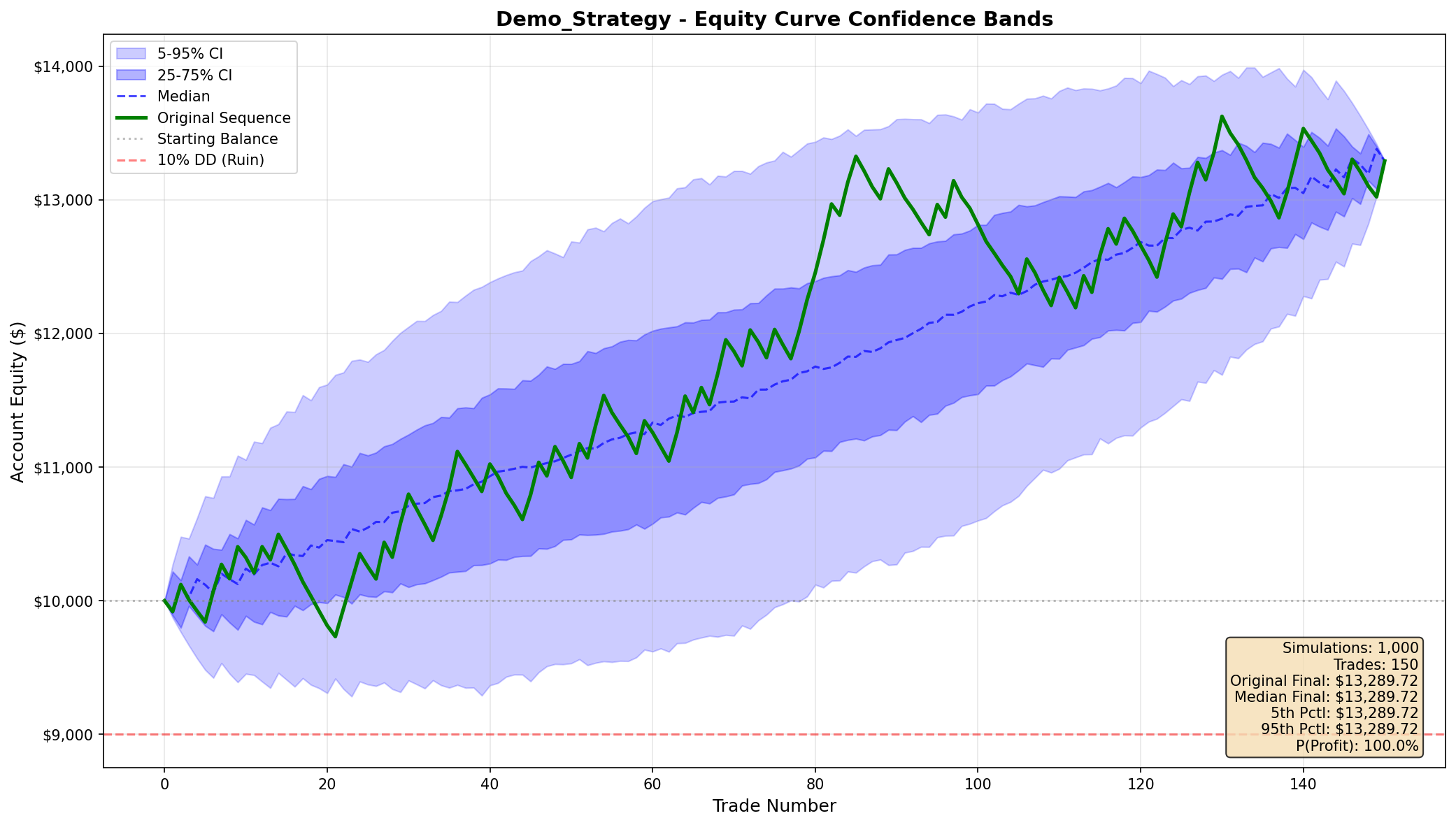
No fake dashboard shots. These are sanitized outputs from systems Jake built. The quant chart uses synthetic demo data and is not evidence of trading performance.

Monte Carlo equity confidence bands generated by Jake's public validation framework using synthetic demo data
Quant validation frameworkMonte Carlo confidence bands from the public repository's synthetic demo. Useful as implementation evidence, not a profit claim.
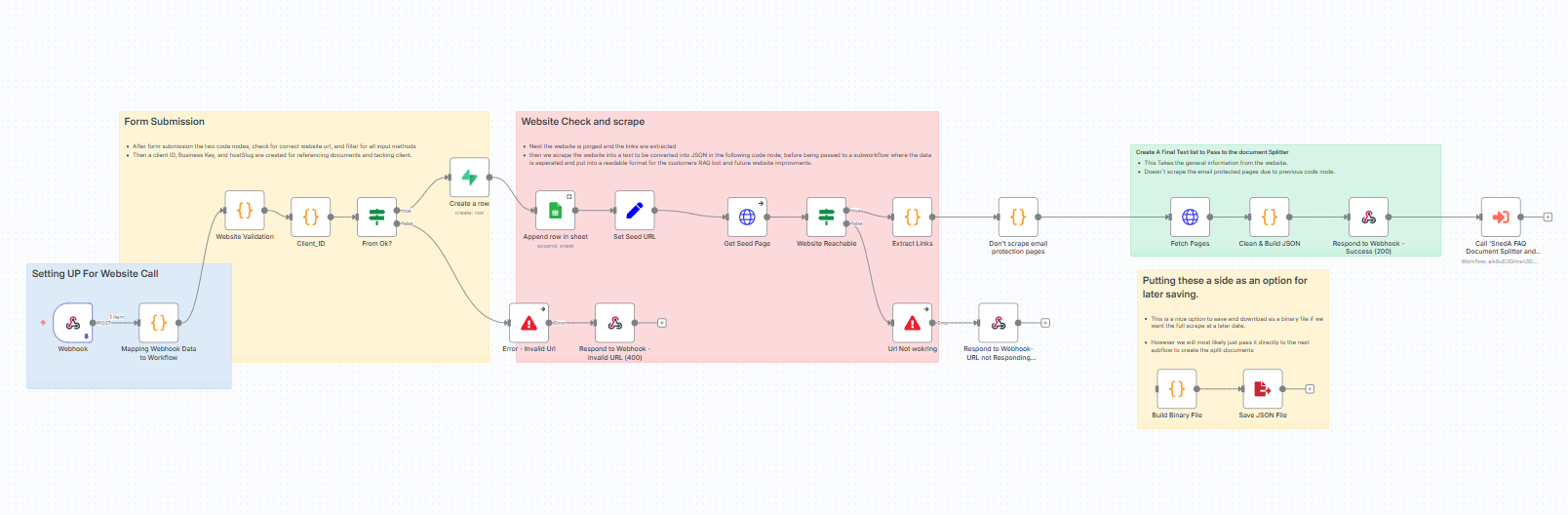
Sanitized n8n ingestion workflow with validation, crawl, error paths and document splitting
Sanitized ingestion laneA real n8n workflow: validation, crawl, explicit error routes, clean JSON, and document handoff. No credentials or customer data shown.
Career spine / selected

Where the pattern came from.

Read it backwards, from now to the start. The domains change every few years and the behaviour does not: observe first, find the real constraint, build it with the person who has to use it, then keep it running.

2025 – nowSnedker Automations · Stuttgart

Went all in, and held back the part that was not safe to ship.

Fifteen months of parental leave spent learning n8n properly, then AI agents, then moving to CLI-first building. I launched the business in September 2025. The main chatbot reached roughly 90% and never shipped, because latency and booking integrity were not good enough to put in front of someone’s customers.

End-to-end ownershipIntegrity before launchNo paying customers
Jun 2021 – May 2026Trading · Zen Traders Academy

Five years, 5,800 USD, and the reason Popper exists.

Five years of full-time discretionary trading, returning 5,800 USD in lifetime payouts. Not a success story dressed as one — it was an apprenticeship in risk, execution, MQL5 and PineScript, live teaching three times a week, and exactly why an attractive backtest proves nothing.

In May 2026 my wife and I made the call: discretionary trading dropped to a hobby, and the algorithmic work went the other way, from side project to near-daily. That decision is what started this job search — not a lack of options.

5,800 USD lifetime payouts0 automated profitLive calls 3×/week
Apr – Nov 2023The Pip Side · remote from Germany

Technical leadership at real team size.

Remote team lead for 12 core contributors plus around eight part-timers: I planned the experiments, distributed the work, trained the group, analysed the results, and made the call at the end. The company closed in November 2023 for reasons unrelated to my project. Teaching returned about 19,000 AUD across two separate ventures: roughly 9,000 from two courses to about 65 students here, and just under 10,000 from Zen Traders Academy later.

12 core + ~8 part-time~150k results / weekAWS EC2
2019 – 2021Kelowna · Tofino · Mexico

Door-to-door sales, and a business run from another continent.

I sold solar door-to-door for EV Green in Kelowna — lead gathering, booked appointments, daily presentations, closing, and handling payment — while running a rickshaw business and building a school bus out in the evenings.

The bus became an Airbnb at 72% occupancy from March to November, which I operated remotely from Mexico until a land-control problem forced me to cancel every booking. That is the whole “run it from anywhere” thesis, and also how it ends when you do not control the ground underneath it.

EV Green door-to-doorPresent + close72% occupancyOperated from Mexico
Mar – Oct 2018New Zealand

Built the van in the evenings, sold it for triple.

Forklift and tractor work in kiwifruit orchards paid for the conversion I was building alongside it. I bought the van for about 2,000 NZD, put in roughly 3,000, and sold it for about 11,000.

~6k NZD profitBuilt while working
Jul 2017 – Feb 2018ThyssenKrupp Engineering · Perth

The first leverage machine.

Three projects went by before I built anything. I watched, asked why cable management took two engineers five to six weeks plus frequent help from a third, and found the bottleneck.

I built the database with the older engineer who would end up using it. The fourth project ran with one engineer and the tool, in about two weeks. Nobody resisted it — they were relieved to get back to the engineering they actually liked. I was offered a two-year contract and turned it down to go travelling.

The measurements are mine, not audited company figures. I use 85% because it is the conservative end.

~640 hours returned per project85–89% reductionExcel / VBA
2011 – 2018Curtin · Sir Charles Gairdner · Perth

Mechatronics where failure mattered, and a business alongside it.

B.Sc. Mechatronic Engineering with Honours, and a thesis on a navigation system for pedicle screw alignment in spinal surgery. Six years of hospital work across Theatre, ICU, Dialysis and Radiology, where the cost of getting something wrong is not a rolled-back deploy.

Through all seven of those years I co-owned a window-cleaning business: invoicing, stock, bookkeeping and chasing receivables. The first thing I ever ran.

Honours + Distinction thesis7 years co-owner6 years hospital
Why I am comfortable in an unfamiliar system

Range is a systems advantage.

I have trekked with silverback gorillas, jumped out of planes, dived through Asia, built homes from bare shells, and committed to destinations before I knew the route. None of that made me comfortable with ambiguity. I was already that person, and it is the same trait that lets me walk into an operation I do not know and watch before touching anything.

30+Countries visited, outward from five different bases
5Bases, not stops — Australia 26 years, New Zealand 7 months, Canada 2 years, Mexico 11 months, Germany 5 years and counting
4Off-grid conversions built by hand, two of them sold or let
The part most portfolios hide

What I have not proved.

Here so you can stop reading if one of them is genuinely disqualifying for your role. None of them is a surprise to me, and each one sits next to something I have proved instead.

01

External production scale

I have not operated a system under substantial third-party load, against an SLA, or through an on-call rotation. My production users have been me, family, or a friend's business.

What I do have: systems those people still depend on years later, and the judgement to know which of my own work was not safe to ship.

02

Unaided Python screening

I architect and read Python systems well, but I would do poorly in a timed, no-AI algorithm test. I hand-wrote MQL5 and PineScript for roughly three years; Python has always been AI-assisted.

What I do have: three years of hand-written strategy code before AI existed to lean on, and a working method built around the tools the job actually uses.

03

Institutional quant employment

My trading work is entrepreneurial and self-funded. It includes real prop-firm evaluations and real losses, not an institutional desk or a profitable automated track record.

What I do have: five years of my own money on the line, which is where the instinct to falsify a good-looking result comes from.

04

Conventional ladder

Git discipline and formal testing became serious recently. I bring unusual system ownership and breadth, not five years inside one mature software organisation.

What I do have: end-to-end ownership of everything on this page — problem, architecture, build, adoption, and keeping it running.

Ask the record back.

The live twin uses a deliberately small recruiter corpus, shows what it cited, and says when the evidence is not enough. In reviewed-demo mode, every sample answer is visibly labelled and links to this page.

Jake / cited AI twin / recruiter modefull screen ↗

“What is the strongest proof Jake can deliver?”

“Tell me the honest trading record.”

“Where is he under-experienced?”

Open the twin ↗
One useful conversation

Bring me the messy system.

I am looking for a Forward Deployed Engineer, Quant Developer, AI Engineer, or AI Researcher role with a real problem and enough ownership to solve it properly.